Black Mold: What to Know
Tucson Mold Removal Pros sets out what dark mold actually is, why a laboratory name rarely changes the repair, and how Tucson homeowners should handle growth they have found.
- Upfront Quotes
- Inspection and Remediation
- Residential and Commercial
By the Tucson Mold Removal Pros team · Updated September 2026
What People Mean by Black Mold
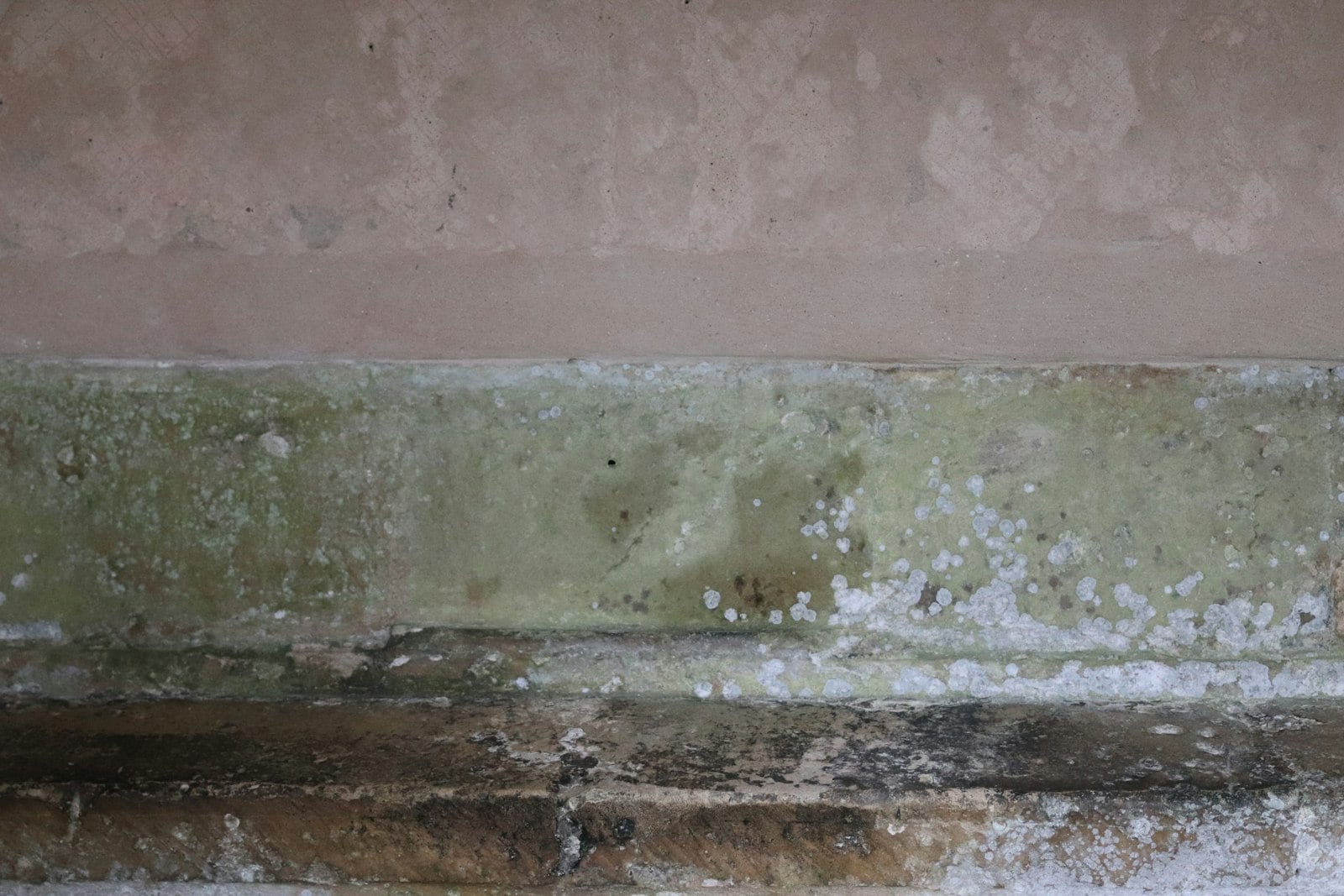
When someone says black mold, they usually mean Stachybotrys chartarum, a dark greenish-black mold that tends to grow on material which has stayed wet for a sustained period rather than being splashed once. It likes paper-faced drywall, cardboard and similar cellulose materials that have been damp for weeks. That is the honest description, and it is most of what a homeowner needs.
The part that gets lost is that color does not identify a species. Plenty of ordinary molds look dark on a painted wall, and the same mold can look different on tile, wood and drywall. Nobody standing in a hallway can tell you what is growing by looking at it, and anyone who does should be treated with caution.
Health, Without the Scare Stories
Mold can irritate eyes, skin and airways, and people with asthma or allergies may react more than others in the same house. That is the limit of what a remediation company should tell you. Symptoms belong to a doctor, not to a technician with a moisture meter, and any company that offers a health verdict along with a quote has stepped outside what it can actually assess.
What is reasonable is this: growth indoors on wet material should be removed, and it should be removed in a way that does not spread it through the rest of the house while you are living in it. That holds whatever the species turns out to be.
Why Testing Often Changes Nothing
If you can see growth and you already know the shower has been leaking, a laboratory result will not alter the work. The wet drywall still has to come out, the leak still has to be repaired, and the area still has to be contained while the work happens. Paying for identification in that situation buys a name, not a different plan.
Testing does earn its place in specific cases. When growth is suspected but hidden and nobody can find it. When a sale, a lease dispute or a property manager needs documentation. When a household member keeps reacting and the source has not been located. In those situations sampling adds information you cannot get any other way, and it is worth doing properly.
How the Work Is Actually Done
The method does not change with the color of the growth. The area is sealed with sheeting and run under negative pressure with filtration so that dust does not travel. Material that cannot be cleaned, which mostly means soaked drywall, insulation, carpet pad and particle-board cabinet bases, is cut back to a line set by moisture readings rather than by the edge of the stain. Hard surfaces such as framing, tile and block are cleaned where they are structurally sound. The area is dried, checked and photographed before anything is closed up.
Before any of that, the water has to stop. Cleaning a wall that is still being fed by a roof leak or a condensate line is a temporary result with a predictable ending.
What Makes It Worse
Scrubbing dark growth with household cleaner is the most common mistake. It aerosolizes spores, spreads them through the house and destroys the evidence an inspection would have used to define the affected area. Bleach is not a fix either; it alters surface color, does not penetrate wet material, and adds water to a problem caused by water. Painting over growth simply hides it until the stain works through again.
Dark Mold in Tucson Houses
People are often surprised to find it here at all, on the assumption that a desert city cannot grow mold. Mold does not need humid air; it needs a wet material. Tucson provides that through roof leaks during monsoon storms, condensate lines that back up in July, evaporative cooler lines, and supply fittings weeping inside walls in homes of every age. Growth dark enough to worry people usually means the material has been wet for a while, which in practice means something has been leaking quietly rather than dramatically.
Homes out in Tanque Verde add older cooling equipment and shaded, slow-drying wall faces to the same list.
Arrange an Inspection
If you have found dark growth, close the room, leave it alone and have it looked at. Tucson Mold Removal Pros can trace the source, define the affected area and tell you what the scope should include. See dark mold removal, book an inspection, compare removal and remediation or ask about scheduling. Ask any company what standards and training its technicians follow before you agree to work.